
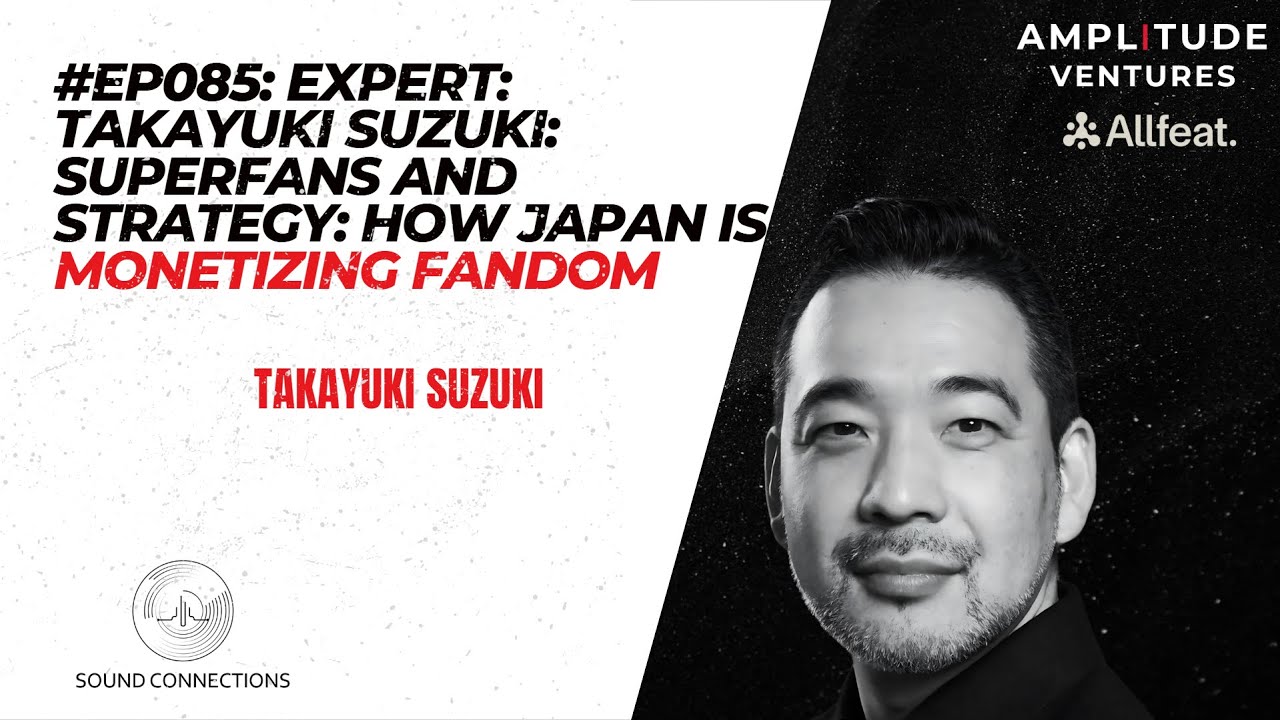
#085: EXPERT: Takayuki Suzuki: Superfans and Strategy: How Japan Is Monetizing Fandom
most of the artists so the think the music will speak by itself right but maybe the more like a fun in the recent ages really more like uh the different of the multiple aspects of the kind of communication or the contents and then also the story uh the story telling also should be cled to each level of the audience in Japanese we say light user it is a really light audiences and then also the meat user like U the maybe mix of the light and the core and cound is a core user is a Karm sponsored by all feet decentralized blockchain solutions for the music industry produced by amplitude Ventures Consulting Partners in early stage music tech today I chat with takayuki Suzuki the brains behind music tech Japan we talk about everything from Japan’s music scene to how super fans and Tech are changing the game and even Explore what the West can learn from Japan’s Innovative approach to music and fandom I learned a ton and I’m sure you will too hey guys and welcome back to the sound connections podcast today today I have taka in the studio welcome hi Jacob thank you for having me T yeah taka you’ve been on my radar for for a long time uh you are the uh chairman and founder of Music Tech Japan and have had a really interesting career in Japan and we met at slush um a couple weeks ago and was really nice to meet you thank you absolutely likewise the great thing about the podcast is that there’s so many people to talk with and and I need to take into order that makes sense for me when it just comes to time and energy um and one of the things that I’ve said a few times through the podcast is that I am sadly very ignorant about the music industry at large when it comes to outside of my financial World primarily which is the west and I think I said this right before I call but like Japan is the second largest music economy in the world and I would say I know close to nothing about it so so I’m going to take the opportunity to humble myself today and learn a bit but but taka for people who don’t know who you are who are you and what do you do okay yeah so I’m happy to introduce myself so uh hello everyone so I’m taka Yuki Suzuki but uh any anyone call me taka in short and then so I was born and a grew up in Tokyo Japan actually I have never had a chance to live aside Japan even Tokyo yeah and then so that I been yeah really I’ve been really of course the really huge music fan and but also the I uh kind of play a guitar in the band in Tokyo and also I was lucky uh to have an experience to opened up the uh the kind of the bands from the oversea like uh bands from the sub pop like L7 or the super sakas and then also the uh from New York like a b like a helmet so I was lucky to have some kind of a uh get into the really kind of music business world at that time but I I have really it’s uh the it was kind of a more like a uh I didn’t have a really good uh images of the uh music business so uh I uh started my career from the uh the karoke company so that was my beginning of the career and uh and now I’m running my uh the independent consulting company uh called par all and working with the Japanese label and management companies and also the tech companies but also I work with the company uh in the history a company like uh the dieser and the Ard and also I’m I’m working with the the US company called open play uh who is providing the uh the back end system and also the asset management for the labor Publishers and then also I’m uh I before that before uh the launch of my own independent consulant company uh I used to work at Universal Music Japan as a head of dis show from 2009 to 2016 so I was uh one of the forefronts of the really kind of a huge change of the business model like a download from streaming and and also of course also leading the physical uh business uh to the digital business and before that I used to work at MTV Japan Music Television Japan and as a head of head of mobile so which is I think interesting like from I think I join when I joined the Universal Music in the 2001 so I think that that was a really unique for a Japanese Market but also there was a a feature for uh the the information uh the the market like a ringtone not ringtune like a ringtone it’s a that was just a Medi at the data and then so I uh when I after join uh the M TV Japan the head of mobile I launched uh the ringtone uh the the service uh branded by MTV and with a partner in Japan and then also the that service providing the rington uh for uh along with the kind of onir uh the music video if you can watch the uh music video in MTV and uh if we have a linkon for the music so maybe got a little sign on that and then if you access when you access to the mobile site you can download the linkton as well so kind of the media mix was really my uh the main uh curiosity and interest uh for to how to how we leverage uh the new technology uh to expand the business and of the brands and then also the uh the the the entertainment so that is my really the main focus on the longtime history and then now also I’m wearing many hats like uh I’m a board of director of the jasak which is the Japanese biggest CMO copyright management organization and then also the adviser for uh music Managers Association in Japan and then also that I’m part of the global music ecosystem like I’m Advisory Board member of the waria music tech so I’m I’m trying to the the connecting the dots uh from the local to Global and also tral uh to Innovation amazing uh well well you’re the right person to talk to and it is to also understand the world’s second largest music Market that I I know sadly to little about so for for a person who would know way too little about Japan could you in a nutshell tell me how it might differ from the American Music Industry okay cool yes so I think yeah this is really is kind of stereotype image for a Japanese music Market is a really physical is still there but is a physical is still dominant like uh roughly 70% is a physical from in terms of the revenue and 30% of from the digital so now I think the 90% of the digital consumption is uh the streaming so now streaming is a dominant in terms of the digital consumption but however uh this is a really kind of a magic number of the magic right and because so the Japanese uh physical products like a CD is really enjoying the high price points and then for example like in the US in Europe I think it’s the 10 euro or the 12 EUR or the 504 Euro 44.99 Euro in the for the CD but Japanese Market uh we’ve been really setting the CD as a kind of a 3,000 yen which is equivalent for 20 Euro or the more so so we the the CD is a really high price point product so that is the reason and but on the other hand but streaming uh the monthly subscription fee is really same as a the us or the European the price point maybe in a currency exchange so I think that that’s in Japan that’s way more cheaper like uh 7 EUR or maybe 6 EUR something like that so in the gap of the the each price point that makes uh the shape of the physical is a 70% addition shows is 30% if oh that makes sense yeah if we uh the recalculate uh the the CD is more like a cheaper I think the more like a I think the the roughly the 5050 of the physical and digital could be the really number of the market share and again I I might be I might be very ignorant when I ask this question but I’m going to ask it anyway so so when I think about Japan and I think about Japanese culture to the very limit of understanding I have there’s also appreciation of art that’s been through you know a history of Japan do you think that plays into the price point of the CD that there’s there’s a more sort of consumer appreciation of the artwork of music or how what do the step stem stem from Yes uh that is a really good good question uh because the high price point uh means also that we are really kind of a I I say we are really innovate Innovative to setting the city so not just selling for the physical product but also the we uh we add some additional value uh to the CD if you buy a CD uh you can uh have uh more like additional uh artwork randomly additional artwork or if you buy the 10 CD you’re going to uh get the chance to win the ticketing ticket for handshaking event or the some kind of meet and greet or if you have a if you buy this buy a CD also you going to access for kind of early uh the access for the ticketing to for tours some kind of the additional additional value is really key uh to to setting the CD is a properly but also that this is some sometimes a little bit of argument like also the the Die Hard fund also the buying the 10 CDs or the 100 CDs or the 500 CDs to uh win the those of the additional value so that is little bit kind of unhealthy but so also the this is the the key uh to make up the bigger the market in Japanese markets I’m really fascinated by um the concept of monetizing fandom in the East and the reason why I’m very fascinated about it is obviously you know uh Korea Japan have been quite successful with that for many years but also really in the contrast to How the West is struggling with it because you know one of my partial conclusions that I’ve made based on on many talks is first of all it’s really hard to just transfer the uh fan engagement model into the West for many different reasons and one of them is what I believe to be uh the concept of value of music so the underlying subconscious value of music and what I understand from from maret like Japan and Korea is that you guys have for a long time and had a strong concept of the value of music and had had the same depreciation of that value uh as a society as the West have had do you believe that to be correct yes uh but I think the the main uh key point for Japanese and Korean market is more like a so now we say super fun right and then the fundom uh is also that I think that we been we are really successful to uh the have a great engagement and the royalities from the fundum and also the monetization so when when it comes to the we say in Japanese like a fun club which is a monthly or the annually uh the pay subcription for the artist each artist and then so the the paid subscriber will get the Early Access for the ticket for the tours or something uh some kind of exclusive content I think that is a really is like a maybe I can say like a basic income for the artists and then also the artists and also the management company uh will be able to focus more like a creativity and then also the I really is uh the the you know live entertainment bring it up the more like quality of the live entertainment space I think that is a really huge difference uh to for a western Market is more like a uh I think that the most of the western uh the artists really maximize the reach to the audiences not something uh the monetization from the really cor fun I think the but I I really believe so that some of the artists maybe could work uh on in terms of the framework of the super fun base I think that this is really new uh the the area uh the Western artist can explore I had a great conversation on on the podcast but off the podcast with the leading exec at at hype and they said something really really interesting that really fascinated me is to to what you said that the Western markets traditionally tend to speak on getting the largest reach where for example hype has much more strategy of how can we hyperfocus on a market like how can we hyper focus on an audience group or in the age group and it it’s not so much about how far can we go but like how deep can we go and I think that’s really very obvious approach but I have again a stupid question but I I’ll allow myself and one of the things that I’m thinking about is what why why is there reason for difference and I I’ve sort of landed that there must be two angles to it and I might be wrong also one is that there might be just just a historical culture in a in a in a you know in a country another one is that there’s a business/ consumer culture that’s been built up over a long time can you decept for me what those two angles might affect in Japan towards fandom is it businesses that just been consistent with that product offering or is this also like a historical culture that makes it easier to engage with fandom what’s your interpretation of that I think the more like uh if why are the touch to the more a historical piece I think the the Japan and or the Korea is really small country is in terms of the uh Nationwide and then also the domestic artists are really touring heavily in a really a small even in a small City uh to cultivate a really small fund base but uh in accumulated on that so I think that it’s going to be a really big fund base and so and then so I think the the Korea and Japan has a really sophisticated uh transportation and then also the logistics uh to bring in more like live entertainment and also the merch and the physical products I think this could be the really good fit for uh uh the the those F uh the the to make uh the fan base enjoyable and then I think that that was really already happening in after World War II after the recovery from the World War II so and then also the television and then also the mix of the television uh but uh also the live entertainment is only uh the the enjoyable contents uh for the small town uh the fun base I think this is really historical kind of uh the buildup uh for uh how they are really uh the passionate for the consume uh the the entertainment and then I think that this is a Korea I think this could fit for a Korea too and yeah and then also the business and the business wise also that this is really uh the the the weekend is is a is a is just a one language uh the country and really sophisticated Logistics make uh the management company or the artist do business really easier and then also uh the transportation will be able to uh the the Buy in the March uh not kind of e-commerce but uh also the really uh the the circulating the uh the exclusive uh booklet uh uh before internet so the fun Club Al the annually or the B anually so the management company uh will circulate uh the the exclusive booklets to the fun Club so this is really kind of unique uh the our uh the way to entertain the fun base I think maybe this is this is not something adap to the multi language countries or the really huge Nationwide countries so I think that this is uh the one of the essence to uh the which makes it unique I think that’s a great perspective and and what I’m definitely hearing from it is that there’s also been made a lot of good business decisions over the years um and that that’s really interesting it also gives me a bit of Hope to sort of growing the pie over here if we somehow can sort of um understand more of that and and deploy it but it’s going to take some time because I think the West have shut itself in the foot a couple of times when it comes to to monetizing music yeah but but one of the things you do at music tech Japan which is really interesting is is also uh startups so startups who are operating Japan and want to go International or have a connection to the broader ecosystem can you tell me a bit about what’s going on in the startup environment in music tech in Japan yeah so music Japan I launched roughly two years ago and then so in uh history of the working uh with the also working with the communicating and with the other Global people and Global uh people in ecosystem in and in the industry so yeah so many times I also I was asked to the okay introducing the some kind of music T startup outside of Japan or the uh the also the Japanese music EX for the Japanese tech people are also the really uh Keen to know about the how what’s happening in the global music market and yeah of course I’m uh happy to help I was happy to help that but I also I just I thought so it could be the really good activities uh for if we uh set up the uh uh the music te Hub like uh the music Europe or the music Germany or the music sck anywhere uh and and my friend runs those initiatives so I think that is the really good uh the learning and also that is a really good role model for me uh to launch music Pi Japan so I think that was really right because now the music Japan is really lucky to the be welcome as a part of the music ecosystem from Global so that opened my door more uh to the have a conversation and also the share the panel and then also the speaking opportunity outside of Japan and also the now more uh the engagement or the reach out uh from the both side of the music startup so from the uh the Japan and outside Japan and also the I’m and also the investors as well it’s fascinating uh can you maybe mention a few names of Music te startups in Japan that sort of have through the last years made a made a global impact yes so I think that one is uh the sound draw uh who is the AI power the music uh generation platform uh but uh of course they are they are not using the copyrighted product copyrighted song uh to train the data and so they uh made really I think the AR uh the player in terms of the a generated song to uh the making the music for uh from the beginning so that was a really as a similar uh the service ads so they just creating the uh the music for the the video or the advertisement or the the corporates uh the outlets but also now uh the there uh the getting to the more like a the uh the making AI generated music for uh uh the beat uh for the hip-hop and the rap so I think this is really great move uh to how we can utilize the AI uh to make a proper song but not not kind of making the really all of the aspect of the song like Melody codes or the sounds but they really focus more like a uh useful way uh to making the Beats so not uh is kind of the uh really uh not so much kind of complex but uh it is really working well in the mainstream music industry and then they already they launched in Japan but also they already reg the US market so that is a really kind of smart move for how they capture uh the mainstream and then also the collaboration uh for the in terms of the hip-hop culture and also the hip-hop industry M because talking about new technologies you know as far as I’m understood that Japan in general are leading quite heavily into like web 3 and Ai and and I can I can imagine since you guys have been um digital disruptors and innovators for many many years like I can imagine you’ve come quite far in in in that music tech can you sort of dissect for me what’s happening in the web 3 and new technology space in Japan that we might not be seeing over here yep so web 3 uh is uh has been the really uh the Japanese governments are really pushing forward uh the wly could be the uh the new opportunity for a Japanese Tech scene not only for the music uh to to capture a NE TR and also the reading uh the the the new area uh in ter for utilizing the blockchain and then also the also the weend combining the IP like anime manga uh to the blockchain maybe could be the really good area uh for a new uh generation of the internet and then also there lots of the startups and also the big company like uh uh the Telo uh the the carrier Telecom carrier also the really leading the wly area like NT Doo which is a largest Telecom company uh and also the second largest KD I also have a a subsidiary uh for with leading with the area but still uh not so much uh the successful case didn’t happen uh from the Japan Global Perspective and also the is the we just see we just uh the have a new prime minister uh in a few few months ago so that makes a little bit kind of slowing down for the WB flea because of the crypto uh the tax framework it’s not so much kind of ease than the us or the EU and uh more like also the Regal uh also the kind of the Restriction uh is uh really hard uh the hard strict uh to the startups also the tech company so uh and I think the the government is saying the we three is a really new uh the key for the Japanese society and the tech startup but uh it’s not so much kind of happening uh yet and yeah AI is definitely also the b word and I think the AI is more like a a the the hot keyword for the entire the Tex scene and and also the music and also the other entertainments so I think they the now also the Japanese government are really uh trying to gather the the as many information and and as many Insight possible and to how what’s going to what kind of the kind of legal framework or the regisration I think it could be good work but I think still see is maybe we can see more like a uh the Ling AI uh too for entertainment space like a sound draw and then also the one other startups from music startup from Japan also the called Baby Jam who is also the utilizing the AI for uh more like a advising the independent artist or independent Creator as to what they should do or something like that but even though um practically speaking the enironment might not be as supportive to three as as the public statements are uh I’m going to assume there’s been a lot of talks both in Industry from an from an industry and from a governmental level the benefits of of web 3 as a country that has succeeded with f fandom I’m monetizing phandom for a long time what role do you see web 3 in blockchain have especially blockchain like what is it that’s so special about blockchain that’s going to create opportunities for monetizing fandom yeah I think the blockchain is uh my understanding and my view on the blockchain is really uh the database outside of the company and the public database for everyone and we can also the check and uh this which is really transparent so I think that is is one of the beauty of the blockchain is uh enabling more like a collaboration between the plants and the plants without uh so much kind of a technical technology company like for example like a Gucci and Adidas that corporated through the blockchain so if if we uh try to the collaborate something with uh those type of companies or who who should invest to the database or the running the systems or and how to build a websites but the blockchain is a really more like a for us to easy easier to making the those database for us to uh the the setting the the digital merch or the digital fashion and also the music itself as well so I think that that is a beauty uh but still in a technology level uh in terms of the development uh is not so quite low and not quite so uh accessible for everyone so I that is a little bit kind of a challenges for uh uh the the who would like to uh leverage blockchain technology But ultimately so my view on the blockchain is like that to so so which means I really I’m optimistic in some way uh for any is more possibilities from the blockchain yeah I I’m I’m I’m I’m what you would call a bit more than blockchain curious uh at M2 Ventures we we own a few Stakes a few different companies one is a is a blockchain based uh company as well and actually the newest sponsor of the sound connections podcast is Alit which is a music industry blockchain that’s going to launch in in February based on a friend oh Switzerland and so I think there’s so much happening in this base and and for the talks I’ve had on the podcast about blockchain I think the general consensus I hear is that from a technology standpoint uh it is almost undeniable that this is a technology uh is superior many ways when it comes to database when it comes to utilizing data in the sake of the artist or the IP IP rights owners and what stands in a way which is not a small thing is adoption um and there’s many ways to tackle that that’s of course you know bear of Entry there’s also public perception there’s financing there’s all these kind of stuff but but as you see it do you believe that blockchain is going to pay play an essential part uh in the music industry in the to come yes I can I can uh imagine uh that’s going to happen so for example like uh I don’t know which is going to happen in the next year but uh I think the U more like uh the on my view I think that there will be the necessary to mix of the digital currency SL stable coin plus blockchain and then I don’t know and the stable coin will take over the digal currency idea or maybe that will be be uh more like a uh the Regional or the P companies the digital currency will be launching but it’s kind of the really the same idea for the blockchain things and then also the which which is has to be or the which should be the transparent and also that we can we need we can check from outside uh in terms of the blockchain is like a blockchain idea I think that that and in that case I think the so we can uh the utilize those type of the uh the the the the the technology uh to the right management and then also the uh the especially more like a Regal contract uh to to make easier uh to to to to happening the collaboration and then Al the beyond the border and then also beyond the kind of framework of tax or something like that so I I I will not say I I I don’t want to pay a tax but this is really more like a make it easier uh it’s really long time uh the the main point of the digital currency or the blockchain I think that that’s that could be the really great area uh to uh for the entertainment world and then also the investment from the fractionalized ownership or the fractionized investment of to the music is also still there uh even like a startup like a jukebox is a uh they are using the the proprietor the technology but also the there will be the more like a case uh for like maybe not crypto but a digal currency with the blockchain uh will make it easier for uh Investment Management yeah and one of the things that I believe Japan to have been um incredibly good at is really implementing new digital Technologies into well consumer buy uh that people money for it if there’s a few if there’s one or a few things you would say would be a long low hanging fruit for the Western mus music industry when it comes to learning from the Japanese market and the way to do music tech and music what would that okay so I think the the maybe fun club uh is a really low hunging fruits and how the Western artist of w management company uh the uh that make a more like a better working framework for the Western audiences because so the fun club and uh fun club and as for the CD is like a physical product as a additional value or the maybe which booklet in the CD is it’s more like a storytelling idea right and uh storytelling is also the essential for a western uh entertainment as well and then so I think the the is now the super fun is a bad word but I think the Western uh the music industry people entertainment industry people uh the see the also super fun concept is uh the really relevant for story telling uh by the artist themselves so how to tell the better story so I think that this is relevant uh to the super fun concept how to monetize because the the no monetization for a no interesting story right so I think story telling and monetization is a really uh the is really kind of same area I I think that’s that’s incredibly precise one of the things that I’ve been discussing with people in the podcast now when it comes to AI is there’s a general consens as far as I understand that there’s going to be a there’s going to be a movement towards a real engagement human con and I think fandom is definitely going to be um they can be taken use of that movement so or it’s a it’s a reaction or it’s a push back to what might be AI generated is that human connection and one of the things you know pairing that with also what I what I spoke with the except at hype with about focusing on going deep rather than wide I think the way for the West to approach this is basically rethinking just the whole premise of how to build an artist and I I think it might be even more simple than we make it and exactly to your point like well the storytelling should be maybe going deep it should be really um not just speaking to the lowest common denominator not just speaking the the widest narrative you can in order to get exposure but actually allowing people to get deeper the same way you would have a relationship with a person you know if you always just on the surface I I think it’s going to be really difficult to create that deep relationship that’s going to last through the years in the same way as an autist learning from what you guys have done from a from a business side but also from from a storytelling and art side which and I don’t know a lot about Japanese culture other than what I’ve consumed through Western media um but um but my perception of it is that the the craft of Storytelling the craft of art is very ingrained in in people and that they understand that that is something to be valued and it’s also something to put money at like the actual storytelling is that correct yeah yeah that that is really the good uh good kind ization and then also that maybe if I may add also the really the story telling also should be the planed to the each level of the audience like uh so we say in Japanese so it is not a proper English but uh we say light user it is really light audiences and then also the meat user like U maybe mix of the light and the core and uh core core found is a core user is a core Farm is the I think the artists uh will will be able to the more like a deeper communication with the core users the super fun and then I think that that is not so uh that that that will not be the same communication with the content to deliver uh the the the the more like a deeper story from the bot bot more bot more like a passion of the each artist and that maybe it that this could be the really not so much kind of Explorer by the Western artist uh with the fun to to the funds I think and then so I think the so artwork music of course uh the also the most of the artists so the think the music will speak by itself right but yeah maybe so at the more like a fun in uh in in the recent ages really more like uh the different of the multiple aspects of the kind of communication the contents and then also the story so I think that that that is a difference uh between the uh the the about 20 the music scene music ecosystem 20 years ago but now that we have YouTube Tik Tok and also the other podcasts but also the we can the make the different as the the the storytelling way as a monetization it’s it’s so incredibly interesting and what what’s really in sometimes with me speaking to people is that I’m a very quick person but there’s also things I’m incredibly slow to understand and those sort of Mind shifts mind mind shifts for me takes a lot of time and actually while you were speaking I was thinking about a specific case and I’ll just explain it to you um so I’ve been in music for 12 years and you know right now I’m Music Tech and startups but before that I also I I was a music producer and and was um in a very successful environment I wasn’t successible per se but the environment around me was quite successful so I know L PLS that are incredible there’s one particular talent that I’ve been working with the last few years just helping her and you know on the sideline and she is one of the biggest talents I know and um 33 uh lives in Denmark hasn’t been able to make a career that is sustainable and I’ve sort of the last month sort of promised her that I’ll look at her case uh and see what what could I rethink and I’ve been wondering okay do I send her to my connections in La that are really high up there try to get in the right rooms to right people and I haven’t really been able to sort of crack the Cote of what I believe to be sensible but but while you were talking and I don’t know if that’s the right strategy it’s just a very interesting thought is this this girl this woman is an incredible Storyteller like absolutely incredible Storyteller like I one of the best and just like it stru me like obviously that’s what we need to play out like it’s it’s go away from that like big exposure big you know how do I get her to the biggest rooms with the biggest people and just like well she has one thing that is unique everyone else over appears and that’s our story time and I just realized now while you’re talking like okay sure that that’s how we need to take it it’s just like you know playing the lottery of exposure and big rooms and you know who you know can be effective over time but there’s something we do have and that’s the ability to tell stories so I just wanted to say thank you for those thoughts because you know I don’t know if it’s the right strategy I just wanted to share it with you and the people it’s just like I tend to forget that all the time that the actual product we’re selling in life is is connection yeah and and as you said if it’s a light layer it’s a light layer it’s a medium layer it’s a medium layer but if it’s a deep layer that is maybe where you can sustain yourself because you can connect over time and have value incredibly interesting thank you for saying that yeah I think the that’s that’s really also the fascinating idea and the fascinating area because also the I been I think the I been really uh I sh in panel in various uh the conference and the various the market various countries and then also the every time I talked about the super fun but uh it is also really interesting to see also that maybe in EU so super fun is more like a gamification uh for uh the the audiences to maximize uh the artist reach and then also spread the share spread the words I think of course which is really important and which is really great and then also also the US market I think that maybe there will be the really different super fun concept I think now now we are seeing the lots of the kind of uh the variance of the concept of the super fun and which is interesting but uh I think the the the the monetization is the the a way for more like sustainability in terms of the building a carrier right I think that this could be the really uh the what we should focus uh not kind of just just uh let let audience fun or let audience or the fund pay in something but uh building uh the engagement and story telling as a monetization uh that that is really uh the import and then also in in Japan so there is a there is a really popular word like osku uh which is uh supporting uh the artist supporting was the creator is our joy so I think that maybe this is a really unique perception in terms of the mindset but uh if if Western artist maybe uh could uh the level up of of to uh the their engagement to that level I think that that could be the really inter think way uh for uh Next Generation yeah and and that’s that’s the really interesting thing to to think about is you have this word Associated to the turs that people would know and would know how to feel in their body and I doubt at least in the Scandinavian countries where I’m placed I don’t think that concept is quite foreign uh but is there a way is there subconscious tangent you can play on that would be the same maybe we don’t have a word for it or a common cultural understanding but like supporting what you love is not a foreign concept right but but we we don’t have a word to it and word does have power um so so I think that that’s that’s really where sometimes the big hurdle is for us at least from TR is how do we how do we how do we build something we don’t have a word for yeah that’s a really good question but I think the so in a really long time like recent 30 years I think the also the Western world has a really Japanese narratives like anime and the gaming right I think the this would help to capture more like a new idea or a new concept of the new mindset to the Western people I think the so there is really more like a seed uh and the soil and then so so now the also the Japanese industry the Japanese government sees lots more the consumption for Japanese anime in Netflix and also Japanese music in the Spotify I think that this is also the really fruit of the seed of the really new narratives uh the provided by the A’s in through the anime or the gaming in the 30 years and then maybe I could see more like a more uh the convergence what more mix of the western mindset with the Japanese mindsets it’s so interesting and again I’m just taking the freedom to to tell a small story here so I didn’t I didn’t grow up per se with a lot of like uh Eastern 200 television but I did you know watch Dragon Ball C and Pokemon and like a lot of a lot of that and and I do have an association to what that is and and I I’m I’m I’m I call it research but I’m playing around with like twoos like sunu all the time like I think I’ve made like 10 or 12, songs so like I I always go deep when I go deep and I’ve sort of come to a point now where I believe that some of the music that I’m creating on these platforms are at the level of the local music industry sort to say but like that that’s how far I’ve taken it so far I believe so now I’m more in the expiration so how do I create a consistent Persona that I can attach myself to um and it’s really for me to understand where are the opportunities in AI generated music if there is any and I was sitting last week and I was generating many many different images for personas for a few songs I had made and what I ended up Landing with is like an almost anim kind of character because that was the the only Association to something that was that was still felt human without being human and I think that might speak to what you’re saying that you know there has been a tradition of understanding the the storytelling from that style at that being accepted as uh personified um does it make sense yeah makes sense it makes lots of sense I think the uh this is really great to hear the story and to how that those kind of narratives works for your output so I think that this is really a great story uh to also the uh this is helping me uh to understand of deeper yeah that’s great it’s good we both come learn well I I think I have a few more questions about you and Japan and and one of the things I’m assuming and I might be wrong is for a western company like say the startup that once to have a market in Japan there might be a lot of um barriers to entry um for example as you say you guys have a strong local economy that’s you know really utilizing it full the whole value chain so is it difficult for startups to get a presence in Japan that comes from the outside okay so sorry is a foreign startup to Japan right yeah I think yeah obviously so the language barrier is really significant so the every product has to have a Japanese translational Japanese UI ux but I think the concept wise and also the product wise I think every product has opportunity to work in the Japanese Market because so the the The Who is the biggest e-commerce Prof phob is Amazon and a search engine Google and we love iPhone and Apple music and yeah I think every product has a really the opportunity and also the now currently as I little bit touched but the uh the Japanese music industry also the government really have more like a momentum uh to exporting the music to the outside of Japan I think the the music startup uh outside of Japan should leverage it and not so much kind of just focus on the bringing their product to the Japanese Market but also that they can pitch to the Japanese artist of entertainment world to export to the global the market I think that that would be the that is really more like a long long lower hunging fruits than the just a make a success in the Japanese market and also the Japanese that that is a really great entrance to also the working with the Japanese music artists and also the other end space I think uh I think that that is now now is a really better time for music to start up outside of Japan so which I really also mentioning LinkedIn and Al I had introduced uh the the Shibuya culture Tech uh the summit uh in culture Tech gathering in cya next year and then also the many some of my network uh the music tech startups founder really interested about it so in other words I might be misunderstanding what you saying is there’s opportunities in taking Japanese products and placing them in New Markets yes yeah absolutely so that that is really great uh the touch Point uh for to working with the Japanese music industry and and I think we actually seeing and I I’m really intrigued by that and and I agree with that um we’re seeing this uh globally like when it comes to Nigerian artist or even Indian artist or there’s there’s so much of um of music for these places that I even in in Native languages that are just really taking its its place in the western Society obviously for whatever immigrants might have come from those regions but also at broader culture like I was when I when I came to Norway four years ago I sort of left my career in the music industry D and I was you know helping starting a conent venue and I worked a bit at a youth club just you know to sustain myself I bu up a new company and no way I’ve an entrepreneur for 12 years so it’s still anything I know um and what was really interesting working at the youth club is I was seeing the 12 to 13 year old kids and they were just consuming Eastern music in Eastern language with Eastern writing like it’s like there was nothing Norwegian about it and I was just so fascinated like wow like this is this is not even a problem it’s they’re fully ingrained in a culture that is not from where they are and really who they am but they find a connection anyways and they find Community both with local things and they have apps where they can chat with people and then it’s just automatically translated into the language right so the barrier of entry into um adapting or connecting with that culture is also really low so I think that that’s really interesting basically what you’re saying or my interpretation of what you’re saying that there’s an opportunity of taking Japanese products and placing them elsewhere and sort of monzingo locally and obviously also globally but but locally I I I think that’s fascinating and I don’t think a lot of people speak like that I think always talk about you know make my own thing and try to sell it a new place instead of like let’s just take works yeah this this is really kind of a stereotype Theory and other that that also the really important so to the make a foundation and make make a fundamental the presence and also the fundamental business and then but uh yeah of course music or other entertainment is only kind of universal right and it’s Global and then also like uh also Japanese music really tied into the Japanese anime and the Japanese anime is also the really somehow big in maybe African uh the Society and also the uh the Southeast Asian society and the both is a and Comm and goal is really have a opportunity not just like uh the sending the Coca-Cola in every country this is really completely different so we can the export import so we can do both uh in global platform I think that is a really big difference than the uh the the economy uh the before internet this is not exactly what you say but it’s it’s also sort of just another imagery to what you’re saying it might be stupid again sometimes I need stupid examples you talk about Coca-Cola right you know the J app they have many products but let’s just say they have one very known product which is the Cola with Su or non Sur but if you look at the same type of Brands like McDonald’s um like when you travel to new countries there’s variations and when you travel to new countries that are very different from America there’s like big variations in the menu and there are you obviously selling local products in Americanized way but with the same brand and I think that’s it’s not completely what we’re talking about but it is about taking what works placing it in new um in a new area and monetizing in new ways um but but taking the brand that works like take what works and sell it elsewhere um incredbly fascinating yeah that’s really also fascinating uh the aspect and yeah we can talk about the one hour or something like that do you think that’s something that the that the startup environment um completely Overlook that opportunity because again I I come from a place of ignorance and that’s what I love about this podcast I can be my stupidest self and and then try to learn but like obviously I have never heard really yeah I haven’t heard that thing in startups like try to try to import culture instead of export your own idea do you see that there’s a model for that do you see that’s happening uh I think that we we can we can see uh the it’s going to be happening but also that maybe if we take a look at it is a startup already but uh if we take a look at the Netflix right so Netflix uh the has many local production for anime and then also the some local film and Export to the US market or the EU market and then they made money right so I think the the the the also the music startup also the will be able to do the same thing and the Import and Export so I think that that is a really interesting uh the case study uh for how we can uh The Leverage Global Network as a technology as a startup or a platform with the working with entertainment I think I think I’ll actually sort of leave the podcast on that now because that is that is such an interesting idea I’ve never been exposed to and even though again most most revelations in life at least for me come in very obvious Revelations if that makes sense again you know I think Revelation comes from understanding to some degree something new and it must be based in what you already know but it just suddenly has a new use case in your mind and I think there there’s there’s something really to be discovered there by me in my curiosity okay the concept of building business with importing what already works and putting it in new context that can be startup in itself and we don’t always need to try to recreate something for scratch or create something entirely for Scratch in order to have something of value that there’s you know there’s plenty of business models talking about Amazon right there’s plenty of business models of selling what works in other countries like it’s it’s no rocket science but I don’t feel like that’s that’s a generally sought after or outspoken approach from music uh I think they try to say export export or export and don’t talk as much as import import import as a business opportunity h yeah yeah I think that that is a that is why because the now the music platform and the music tech platform it works as a discovery right and then so it’s it’s not just selling the proper or the established products so the music like Spotify also will be able to introduce new music to them and then also that if we take a look if we look look back in history so I think that the music or entertainment is really uh the the it is important that when uh we come across right and uh so even the Beatles like was also the fear for the old older generation at that time and then but the the teenag come across with be so they are really passionate to support and the consume and also they really enjoyed their music and the anime or the Japanese music is really same and through the Spotify or the any other stream platform and then so I think that this is the same thing and also that for example like a metaverse is the same like the the the RO rock or the fortnite is a really new thing and but also already kind of a teenager or the maybe younger generation already come across with really there the entertainment I think the that’s going to be easily in uh LLY 10 years or 15 years that’s going to be mainstream so I think the we can leverage it uh in terms of the how to build a new new business taka it’s been a pleasure and I learned a lot from this talk and um I definitely want to talk with you some more at a lady episode than podcast and and because I have so many more questions I sort of want to ask when it comes to what we just discussed here um but until then taka it’s been a pleasure uh it’s been great to have you on and I’m sure I’m going to see you at other conferences in the future I’ve really tried to get to bnia this year so I’m going to expect well next year not expected to be there I guess um yeah so so taka how can people reach out to you if they want to know something about Japan or they want to have consultany in the startups how can it reach out okay you can find me on the LinkedIn that you can search takayuki Suzuki and then then maybe I don’t know if you put the link in the description or something like that but your name okay okay great okay great so I think yeah I I’m always open for uh the that message s love it well thank you so much thank you so much so thank you for having me so that was really pleasure [Music]
Japan’s music industry, the second largest in the world, is spotlighted in this episode as Takayuki Suzuki, founder of MusicTech Japan, shares his expertise. From the enduring dominance of physical music sales to innovative approaches in monetizing fandom, Taka unpacks the unique characteristics that set Japan apart. He also discusses the role of Web3, AI, and storytelling in shaping the future of music, offering valuable insights for startups and global audiences looking to learn from Japan’s success.
Sponsored by Allfeat: Decentralized Blockchain Solutions for the Music Industry – https://www.allfeat.com/
Produced by Amplitude Ventures Consulting: Partners in Early-Stage Music Tech – https://amplitude.ventures
Follow on;
Spotify: https://open.spotify.com/show/2omT8uLhBamH3GFeih4oo3?si=45206dd146a84ae1
LinkedIn: https://www.linkedin.com/company/soundconnectionspodcast/
Instagram: https://www.instagram.com/soundconnectionspodcast?igsh=bDZzbnhrYXBlNHBr